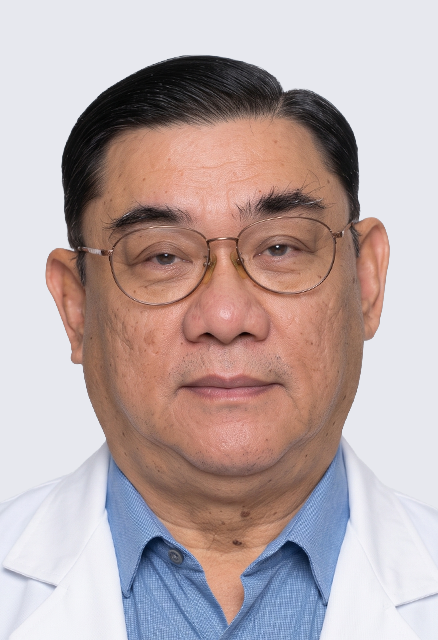
Professor Dr. Tan Nget Hong is an expert in toxinology, venom biochemistry, and natural bioactive compounds, whose research has significantly advanced the understanding of snake venoms and their medical applications over more than four decades. Widely regarded as one of the country's leading toxinologists, his work has laid the scientific foundation for venom proteomics, antivenom development, and the study of biologically active compounds from medicinal mushrooms. Through his sustained contributions to biomedical research, Professor Tan has helped position Universiti Malaya as an internationally recognised centre for toxinology and natural product research.
Professor Tan earned his Bachelor of Science in Chemistry from National Taiwan University before pursuing both his Master of Science and Doctor of Philosophy in Bioorganic Chemistry at the University of Chicago, where he completed his PhD in 1976. Following his return to Malaysia, he dedicated much of his academic career to Universiti Malaya's Faculty of Medicine, where he served as a researcher, educator and mentor while contributing extensively to the development of biomedical sciences and molecular medicine in the country.
Professor Tan's research spans three major areas: venom biochemistry and toxinology, antivenom development, and bioactive compounds from Tiger Milk Mushroom (Lignosus rhinocerotis). His pioneering investigations into the biochemical composition of snake venoms from cobras, kraits, vipers and sea snakes have provided critical insights into venom evolution, toxin diversity and mechanisms of envenomation. His work has also contributed substantially to improving antivenom efficacy through proteomic analyses, immunological studies and cross-neutralisation research involving medically important snake species across Southeast Asia. These findings have enhanced clinical understanding of snakebite treatment while supporting the development of more effective therapeutic interventions for one of the region's most neglected tropical health challenges.
Beyond toxinology, Professor Tan has been instrumental in expanding scientific knowledge of Tiger Milk Mushroom, one of Malaysia's most valued traditional medicinal fungi. His research group was among the pioneers in applying modern molecular biology, genomics, proteomics and pharmacological evaluation to validate its medicinal properties. Their studies demonstrated promising antioxidant, anti-inflammatory, immunomodulatory and anticancer activities, helping transform traditional ethnomedicinal knowledge into evidence-based biomedical research. This body of work has attracted international attention and opened new opportunities for developing natural therapeutics derived from indigenous biological resources.
As an accomplished scholar, Professor Tan has produced more than 135 journal publications, secured over RM2.4 million in competitive research funding, and supervised numerous postgraduate researchers. Perhaps equally significant is the research ecosystem he established at Universiti Malaya, where many of his former students and collaborators including internationally recognised toxinologists have continued expanding Malaysia's global influence in venom research and proteomics.
His scientific excellence has been recognised through numerous honours, including the prestigious Science and Technology Award from the Malaysian Toray Science Foundation (MTSF) in 2009, in addition to multiple Universiti Malaya Excellent Service Awards. Throughout his career, he has also received international fellowships from organisations such as the International Union of Biochemistry and Mahidol University.
Beyond his own research achievements, Professor Tan has made lasting contributions to medical education, curriculum development and scientific mentorship. His commitment to nurturing future researchers has influenced generations of biomedical scientists, many of whom continue to build upon his pioneering work in venom biology, toxinology and natural product discovery. Today, Professor Tan Nget Hong remains one of the pioneering figures who shaped Malaysia's international reputation in toxinology while advancing Universiti Malaya's standing as a centre of excellence in biomedical research.